
Upbringing and childhood (1962)
Ahmed Mansour was born in the city of Kafr El-Dawwar (1) in the Egyptian governorate of Buhaira, on July 16, 1962. His father worked at the Misr Spinning and Weaving Company in Kafr al-Dawar.
He returned with his parents to their hometown in the village of Minya Samanoud, Aga in the Dakahlia governorate, at the age of four. He attended a kuttab (Islamic elementary school) where he learned to read and write and memorized ten chapters of the Holy Qur’an at the hands of Sheikh Jaafar al-Murshidi, one of the most famous Quran teachers in the village at the time.
His early memorization of the Holy Qur’an helped him love the Arabic language and the stories of the Quran, making him passionate about stories, books, and historical stories in general, to the point that he would save what little allowance he received and spend it on books.
He visited the Cairo International Book Fair for the first time when he was thirteen years old, with only 3 Egyptian pounds ($0.10), which was all he had. The books that he bought were the nucleus of his library, which now includes thousands of cooks. He had dreamt as a young boy to be someone who wrote books or novels that people read.
He was known for having leadership qualities from a young age, and so he was elected president of the Student Union at Minya Samanoud Preparatory and Secondary School throughout his school years. He was also in charge of the school radio throughout the year during those years.
It was said that because of his passion for reading, the librarian, MS Laila, a mother of his schoolmate and friend at the time, Khaled Rabie, prevented him from borrowing books after she noticed his insistence on borrowing a book or a new story almost every day. She was afraid it would distract him from his schoolwork, but the teachers informed her that he was excelling in his studies so she allowed him to borrow books, stories and novels again, on the condition that he wouldn’t borrow any during exam times (2).
University studies and a passion for journalism (1980)
Ahmed Mansour graduated from high school with honors and his teachers advised him to study literature to help him develop his writing and journalism skills, a field in which he dreamt of working. He joined the Faculty of Arts at Mansoura University, and through his extensive knowledge and reading, he was able to establish strong and distinguished relationships with his professors in the Faculty of Arts, most of whom were seconded from the Faculty of Arts at Cairo University. His university was new at the time and Mansour was one of its students from its second graduating class.
In the Faculty of Arts at Mansoura University, Mansour studied philosophy under the guidance of Dr Hassan Hanafi, comparative literature under the guidance of Dr Helmy Bedir, Farsi under the guidance of Dr Al-Seba’i Muhammad Al-Seba’i, philology under the guidance of Dr Mustafa Ibrahim, poetry under the guidance of Dr Ali Abu Zaid, and grammar and rhetoric under the guidance of Dr Ibrahim Barakat, who issued a comprehensive encyclopedia of grammar and rhetoric.
When he joined the university, he contacted some newspapers and magazines, began writing news pieces and articles for them. Given his extensive knowledge and information, Dar Al-Wafaa for Printing and Publishing – which later became one of the major publishing houses in Egypt – offered him a job while he was undergraduate, to supervise the selection and evaluation of authors’ books, and write the publisher’s introductions for books that were selected. This experience helped him gain more exposure, respect, and appreciation from a large number of authors, writers and publishers in Egypt and the Arab world. This is especially after Dar Al-Wafaa appointed him as a director of its publications and publishing department, making him completely responsible for dealing with the authors for three years. During that time, he published over 150 books that he chose from dozens of books submitted to the publishing house. He also made deals with authors who were from various Arab countries, wrote their introductions, and oversaw the printing stages. Dealing with the authors, publishing houses, and printers gave him great experience in this field, as Ahmed Mansour considers the field of publishing the closest to the world of journalism (3).
Delving into the world of journalism (1984)
However, working in the field of publishing was a stage for him, and journalism was his passion and his main ambition (4). His professional work in publishing during his university years and his military service after graduating from university was part of his passion for books and reading, and during this time, he continued to look for an opportunity to work in journalism.
However, journalism work in Egypt at that time was limited and confined to government and partisan newspapers, and none of them were an aspiration for him. So, he began looking for a job opportunity in the press outside Egypt, through which he could learn journalism properly and move away from the restrictions of the Egyptian government and parties. He had several opportunities, but they did not meet his ambitions, until he got the opportunity, at the beginning of 1987, to be a correspondent to cover the Afghan war for the Kuwaiti Al-Mugtama magazine, as Afghanistan was under Soviet occupation at the time (5).
The Beginning: Covering Wars
One of the main factors that helped Ahmed Mansour to accept this experience is that he read a lot about journalists who gained their professional respect and fame through their coverage of wars. It tempted him and encouraged him to go through with the experience that could serve his career better than working in the offices of any newspaper. He believed his coverage of the Afghan war could be a great opportunity for him to excel in journalism, so he seized the opportunity and did not waste it.
Ahmed Mansour was surprised when he traveled to Pakistan at the absence of Arab journalists covering the Afghan war. There were only a few who would go on intermittent visits. After two months of observing the field, he preferred to become a freelance reporter, allowing him to write for Al-Mugtama and other newspapers and magazines. He did in fact become a correspondent for newspapers and magazines, including the UAE’s Al-Ittihad newspaper and Kuwait’s Al-Mugtama. His articles and reports were on the covers of Al-Mugtama and the front pages of the UAE’s Al-Ittihad newspaper, especially his interviews with Afghan leaders at the time. He would cover the events in an interesting manner and style, combining an interesting literary and nonfiction style, in which he mixes the energy of journalistic stories with the suspense and eloquence of the Arabic language. (6).
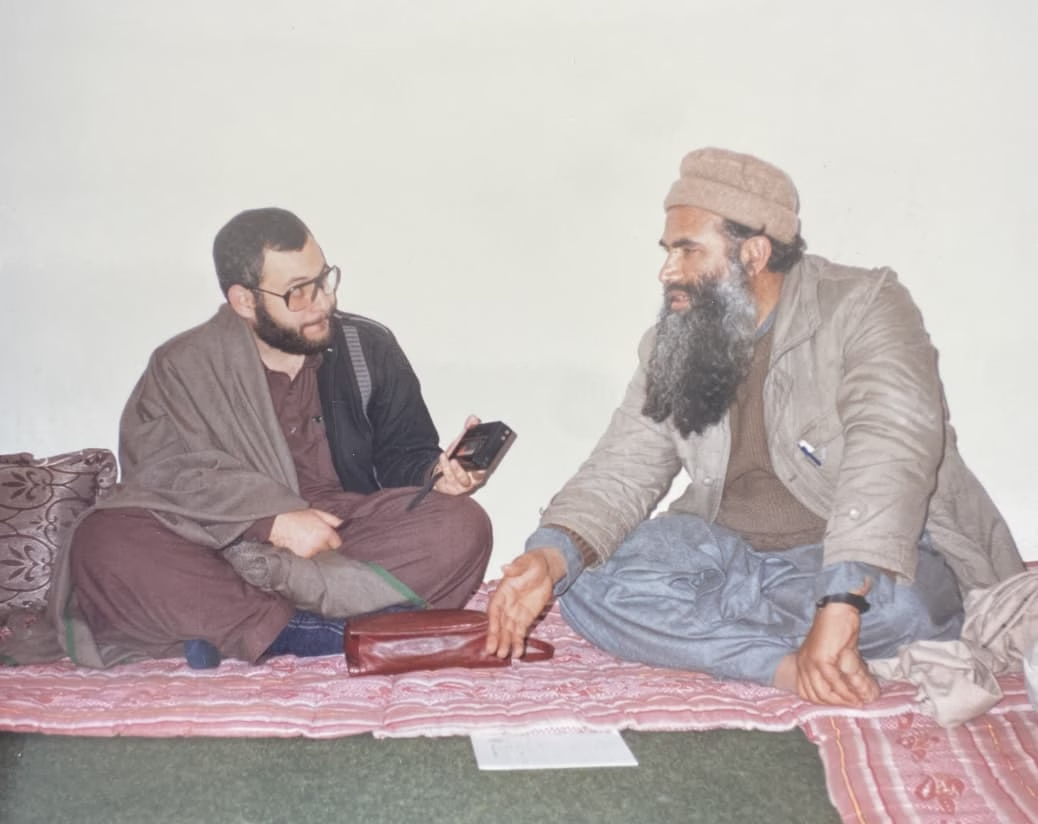
Ahmed Mansour has noted that he learned the true art of journalism during his coverage of the Afghan war, and that he followed the style of Western journalists in covering wars, through telling news stories. He also wrote news, investigative pieces, analyses, reports, and interviews.
Given his passion for writing as a child, he had the linguistic repertoire and unique vocabulary, all of which helped him write his content and news stories.
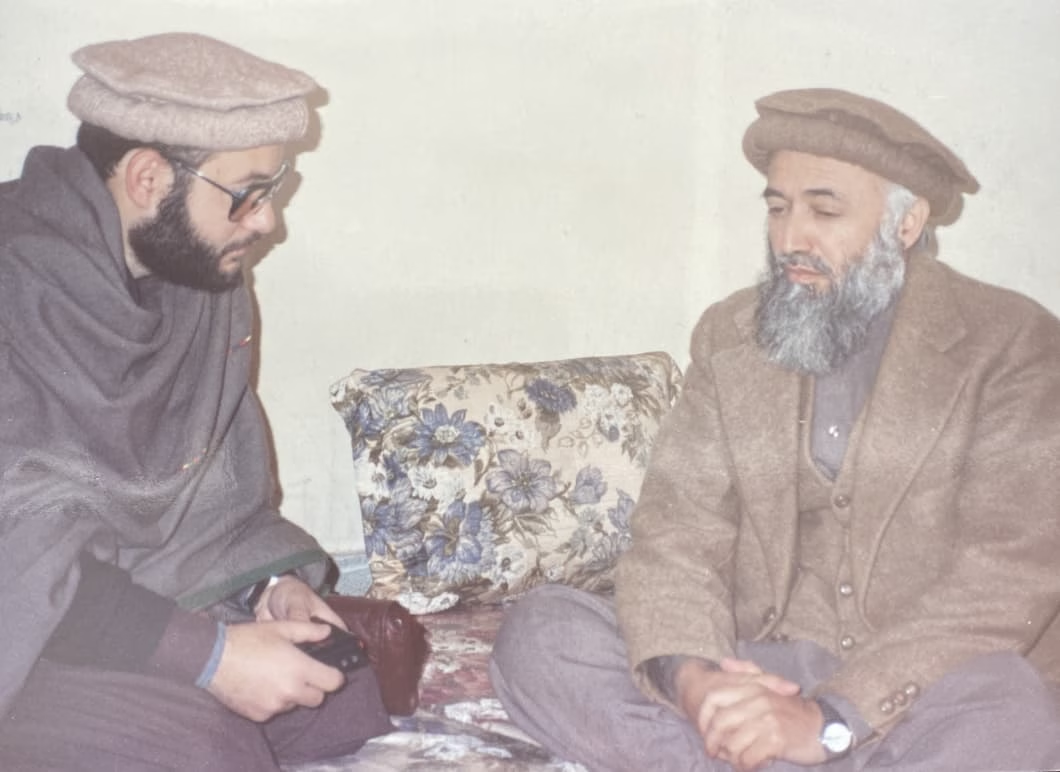
During the three years of his coverage of the Afghan war between 1987 and 1990, Ahmed Mansour wrote about 1,000 various journalistic pieces that were published in more than 6 Arab newspapers and magazines. He also wrote four books, The Future of Kabul, A Woman from Afghanistan, Under the Hail of Fire in Afghanistan, and The Future of Afghanistan Under the Taliban which he published while he served as editor-in-chief of the Kuwaiti Al-Mugtama Magazine. This put him on solid ground and allowed him to follow his life’s journey in this profession with steadfastness and determination.
From the Afghan war to Kuwait’s Al-Mugtama
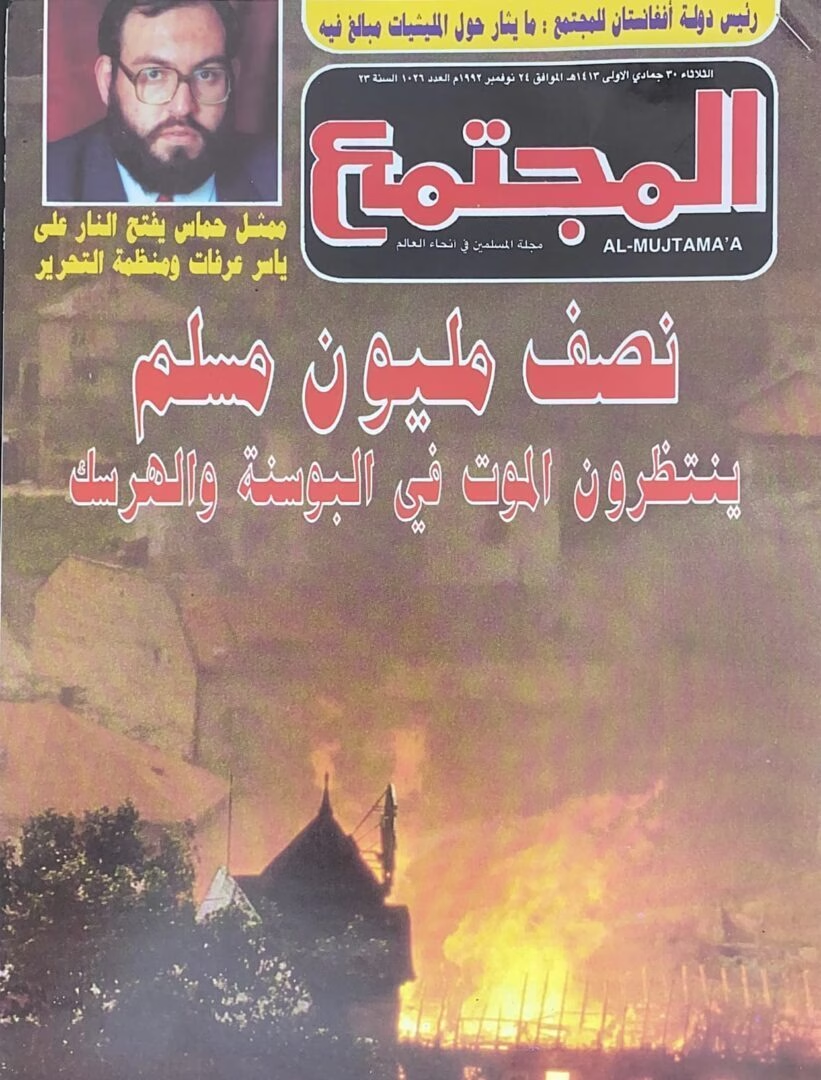
Ahmed Mansour was first introduced to Kuwait’s Al-Mugtama magazine when he was in middle school, after Mr. Hamed Sharaki, the father of his friend, Hisham Sharaki, who was a teacher in Kuwait at the time, gifted him copies of it upon his return from Kuwait during his summer vacation. Ahmed grew fond of the magazine and was fascinated by the great freedom with which Arab and Islamic issues were addressed. He dreamt of becoming one of its journalists, as the margin of freedom is the most important pillar of journalistic creativity and this was available in great abundance with Al-Mugtama magazine. Kuwait was experiencing a great renaissance in the field of journalism, and it was attracting large numbers of Arab journalists. Ahmed Mansour’s request from anyone he knew working in Kuwait was to bring him issues of the Al-Mugtama magazine, which the Egyptian authorities did not allow to be distributed in the country due to its critical position on the Egyptian regime, especially after Sadat visited Israel in 1977. Ahmed Mansour’s first dream came true when he worked as a reporter for Al-Mugtama, covering the war in Afghanistan and the affairs of Pakistan and Central Asia for the magazine for three years from 1987 to 1990, with his stories featuring on its covers. (7).
Managing Editor of Al-Mugtama (1990-1997)
However, three years later, something bigger than the dream of working as a journalist in Al-Mugtama came to him. The Chairman of the Board of Directors of the Kuwaiti Al-Mugtama magazine at the time, Mr. Abdullah Al-Ali Al-Mutawa, and then the Editor-in-Chief, Dr Ismail Al-Shatti, who later became a minister and deputy prime minister in Kuwait, contacted him, and they asked him to move to Kuwait to work at the magazine, not as an editor, but as managing editor.
He was 27 years old at the time, making him the youngest managing editor of a Gulf weekly political newspaper or magazine. Although the offer was tempting, he declined it at first, because his position covering the Afghan war gave him a distinguished professional status as a professional reporter, and he became a reference for many Arab newspapers that were quoting him and for the Arab journalists who made visits to cover the war, who also considered him a reference. He also began preparing an encyclopedia on the course of the Soviet occupation and the Afghan jihad by recording testimonies with prominent mujahideen leaders, which he would like to complete. Moreover, he had concerns about moving to work in the field of office journalist work, where there is no momentum of events and he would not experience the challenges experienced by a reporter on the battlefields.
However, his decline of the offer prompted the magazine to hold on to him and negotiations between the two sides continued for six months, ending during Mr. Abdullah Al-Ali Al-Mutawa’s visit to Pakistan, during which he met Ahmed Mansour and persuaded him to move to Kuwait and take over his duties as a managing editor for Al-Mugtama magazine. Ahmed Mansour had accepted on the condition that he make an initial visit to get to know the new job.
Indeed, Ahmed Mansour paid a two-week visit to Kuwait in June 1990, during which he met with the Editor-in-Chief, Dr Ismail Al-Shatti, the Chairman and members of the Board of Directors. He observed the situation at the magazine and set in place an ambitious plan to improve it and take it from a Gulf magazine to an international Arab magazine by covering global issues, events, and content that address events from an Arab-Islamic perspective. Mansour was passionate about the model of Time and Newsweek magazines and hoped there would be an Arab magazine at the same editorial level, comprehensive cover of topics, and a wide margin of freedom in terms of addressing issues and expressing opinions. After long discussions, those in charge of the magazine approved his plan, and gave him six months to show its fruits, so he agreed, and this was a great challenge for him.
Mansour returned to Pakistan and settled his business and his various professional commitments, then returned to Kuwait, and assumed the duties of his new job as managing editor of Al-Mugtama magazine. However, something he did not expect happened.
From the Afghan war to the occupation of Kuwait (August 1990)
Ahmad Mansour arrived in Kuwait at dawn on August 2, 1990, on a British Airways plane coming from Karachi via Kuala Lumpur, which arrived at Kuwait Airport at 1 am, amid tension and news of a possible Iraqi invasion of Kuwait. The passport officer at the airport had recognized him and asked him with great concern while stamping his passport with the entry stamp: Do you think, given your journalistic experience, that Saddam could enter Kuwait?
Ahmed Mansour did not know at the time, nor did the Kuwaiti officer who stamped his passport, that Saddam Hussein’s forces may have already crossed the Iraqi-Kuwaiti borders at that time, and that the Iraqi paratroopers were on their way to land in Kuwait Airport and occupy it.
Ahmed Mansour exited with a few passengers from the airport, while most of the passengers on the plane were on their way to London, but the Iraqi forces parachuted into the airport and took the passengers hostage to Iraq. Saddam Hussein did not release them until after mediation by the world-class boxer Muhammad Ali Clay.
When Mansour arrived at the hotel, which was located in the heart of Kuwait City, he felt that the situation was not stable, and an hour later, he heard shelling, so he called the reception desk and asked what was going on. He answered, “The Iraqi forces entered Kuwait.” He went out to check out the situation and found the Iraqi forces in the heart of the city and chaos was everywhere.
Everyone was shocked and could not believe what was going on. The hotel he was staying in was located next to the main communication center in the heart of the city, close to the markets, so he went out for a walk in the markets to see how the people were. He found panic everywhere, and people were buying everything from grocery stores while bakeries had crowds of people.
He went back to the hotel to figure out what he should do.
Ahmed Mansour contacted Dr. Ismail Al-Shatti, who was aware of his arrival. They met and kept in contact daily. Dr. Ismail Al-Shatti gave him the option to leave Kuwait or stay with its people who decided not to leave, as the situation was unclear during the first days of the Iraqi invasion of Kuwait. Mansour said he would stay and that it would be an additional journalistic experience for him to add to his experience.
His decision to stay was welcomed and appreciated by Dr. Al-Shatti and the Kuwaiti staff. At the beginning of the invasion, he met almost daily with Dr. Al-Shatti and some other colleagues, either at the Al-Mugtama headquarters, or in one of their homes. Some of the people who took care of him and accompanied him during that time was one of Dr. Ismaili Al-Shatti’s friends, lawyer Abdul Hamid Al-Sarraf, Dr. Hassan Makki, Hamad Al-Jasser, Jamal Al-Kandari, Khudair Al-Enezi, Dr. Adel Al-Falah, and many others, who did not leave him for a single moment. They all became very close afterwards and he still has a friendship and respect for them, as crises form special relationships between people.
Initially, the Iraqi forces did not pose any danger to the people, and they did not enter everywhere. The people of Kuwait were still visiting each other and moving freely, so Dr. Al-Shatti arranged for Ahmed Mansour, through some friends, a place to stay that was safer than the hotel. He stayed in one of the homes of his Kuwaiti friends. He also arranged for him to be granted an official Kuwait residence permit that would allow him to move freely. This was done through one of the Kuwaiti passport officers, who, after the invasion, moved their machines and devices out of the passport building and helped people by issuing permits and passports so that they could leave the country or deal with the Iraqi forces.
The people of Kuwait and its residents remained in shock for several days, not knowing what to do. The airport was closed and communication was cut off, while cell phones were not known at that time. Even Ahmed Mansour lost contact with his family for nearly two months, and there was no means of communication except for one phone that worked through satellite and a large receiver with a diameter of two meters. It did not even work all the time, and whenever he tried to call his family, it did not work.
There were two ways for the people in Kuwait to leave by land, either through the Saudi border, or through Iraq for the residents of Kuwait, but Mansour decided to stay in support and solidarity with the Kuwaitis. This was especially after they told him that they needed him to help them edit a secret newspaper that urges the people to stay and not leave the country and resist occupation forces, which changed their behavior and started attacking people (9).
Al-Murabitoun newspaper
Saddam Hussein’s occupation of Kuwait on August 2, 1990 was at the height of the summer months, when many Kuwaitis were outside the country, and many people left after the occupation. However, many also decided to stay, and some even decided to resist the occupation after the many arbitrary arrests by the Iraqis. At the time, the fatwa of self-defense against one who usurps land and money, was popular in Kuwait, especially after the people became anxious about their homes, money, and themselves, as everyone was subject to arrest, and property was subject to looting at that time.
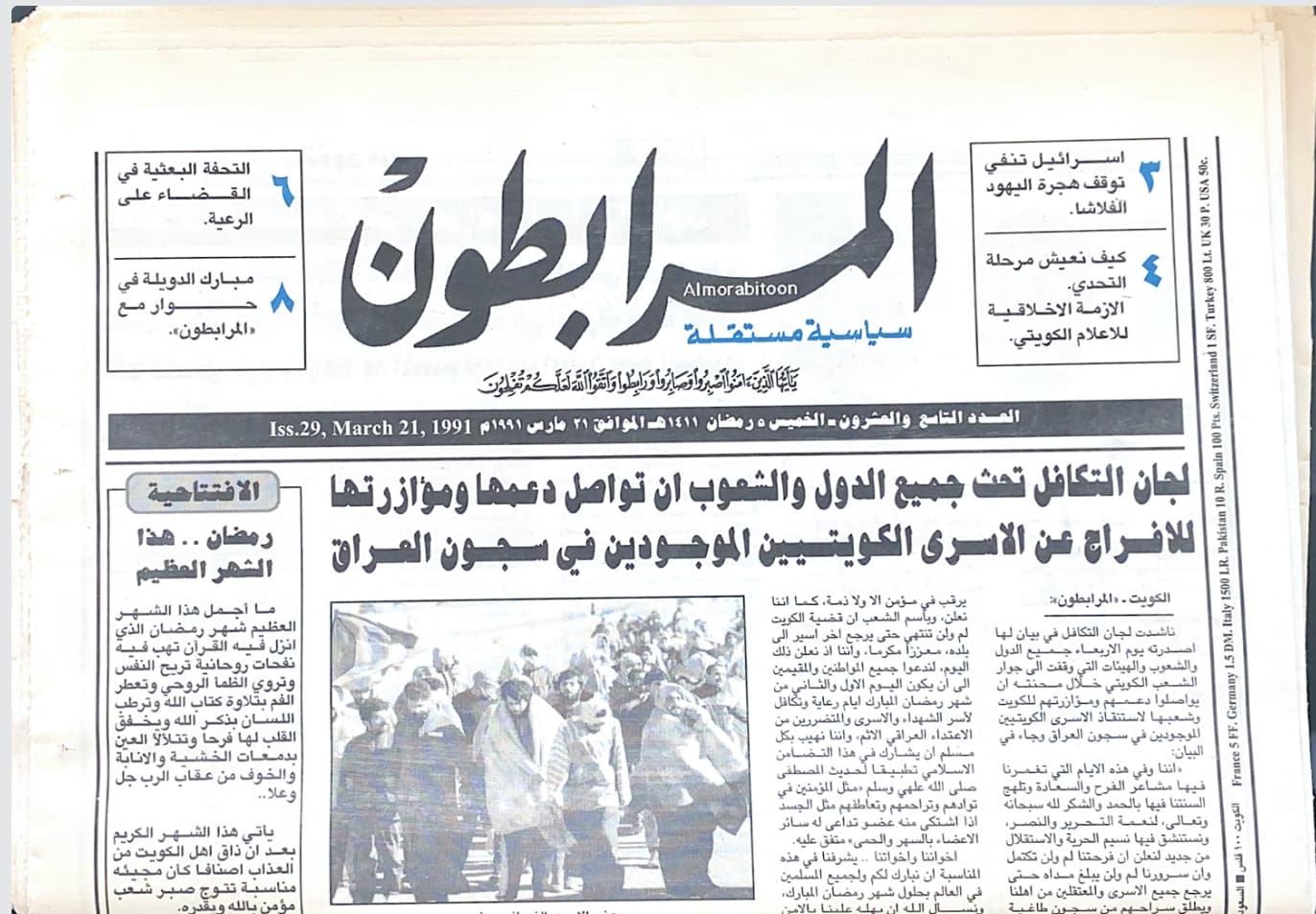
The Kuwaitis who remained in the country issued a secret newsletter that was distributed inside Kuwait, and they called it Al-Murabitoun, and they asked Ahmed Mansour, if he decided to stay, to edit it, if they form a team that provides him with information and various news around the clock, so that he can do his work as its editor-in-chief. They gave him the total freedom to accept or decline the offer, and he was completely free to leave Kuwait or stay with its people.
Mansour said to them, “You have overwhelmed me with your generosity, brotherhood, and friendliness since day one of the occupation and you considered me one of you. I will not abandon you while you are under oppression and occupation, as the support of the oppressed is a duty. I will stay with you as long as you stay and will do my duty towards you. I will not leave you until God lifts this oppression from you.” This position put him in a special position with them and many of them still remember it today and he still remembers their care and concern for him like one of their own throughout that entire people, which lasted two months, before he left Kuwait at their request.
Six issues of Al-Murabitoun newsletter were issued inside Kuwait during that period, and it was widely distributed in mosques, markets, and on cars on the roads. However, it has become a danger to everyone who had copies of it, making them subject to arrest. The Iraqi forces began searching for its headquarters and the place in which it was printed after it had become a source of news and an indication of the people’s steadfastness and secret work. Those in charge of the newsletter asked him to immediately leave Kuwait and go to London after they decided to issue it from there as a weekly newspaper and they arranged this. Mansour left Kuwait through Iraq and from there to the UAE, where he had a residence permit, and from there he went to London. (10)
From London to Kuwait after liberation
Al-Murabitoun was issued from London as a weekly newspaper, and it was printed in the presses of the Saudi Research and Media Group (SRMG), which used to publish the Asharq Al Awsat newspaper in London. At the same time, Al-Murabitoun was printed in Saudi Arabia, and it continued to be published until the liberation of Kuwait. After that, Mansour returned to the UAE and stayed for several months, during which he worked as the editor-in-chief of the Emirati magazine Al-Islah, which was published from Dubai. He transformed it from a monthly magazine to a weekly one, before returning to Kuwait, where he resumed his plan to develop the Al-Mugtama magazine, which during his years of editing it, between 1990 and until he joined Al-Jazeera in May 1997, one of the most important and popular Arabic magazines in the Gulf, the Arabian Peninsula and many countries of the world. He used to write a weekly column, “Without Borders”, which he turned into a TV program on Al-Jazeera afterwards. He also wrote an editorial for Al-Mugtama, in addition to other investigations, interviews, and analyses.
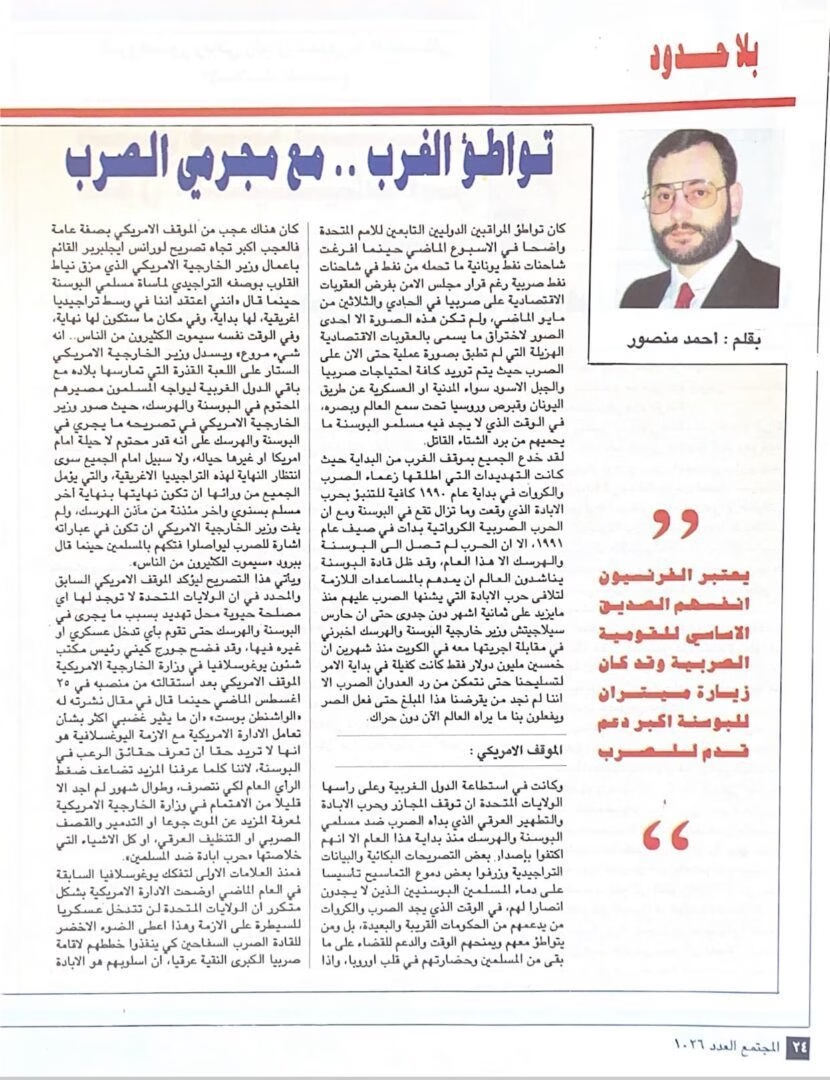
He also succeeded in recruiting dozens of thinkers and writers from around the world, including many Western thinkers and writers, and conducted dozens of interviews with leaders and politicians, including his interview with Recep Tayyip Erdogan, the governor of Istanbul in 1994.
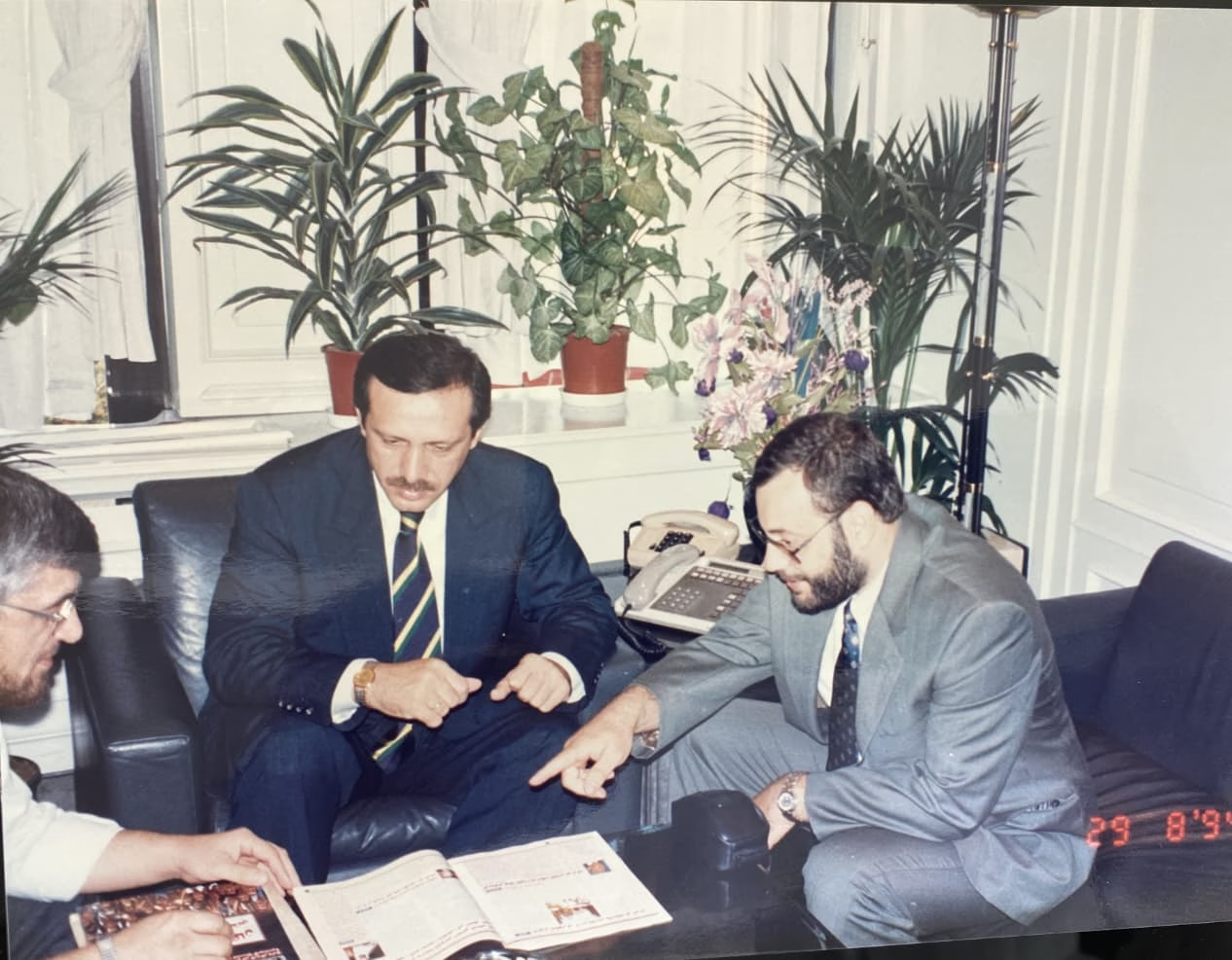
Mansour established a wide network of correspondents for the magazine, spreading across more than 40 countries, and the magazine was distributed to 120 countries during his time there. When he received it after the liberation of Kuwait, it was printing only 4,000 copies, and when he left it, it was distributing 75,000 copies.
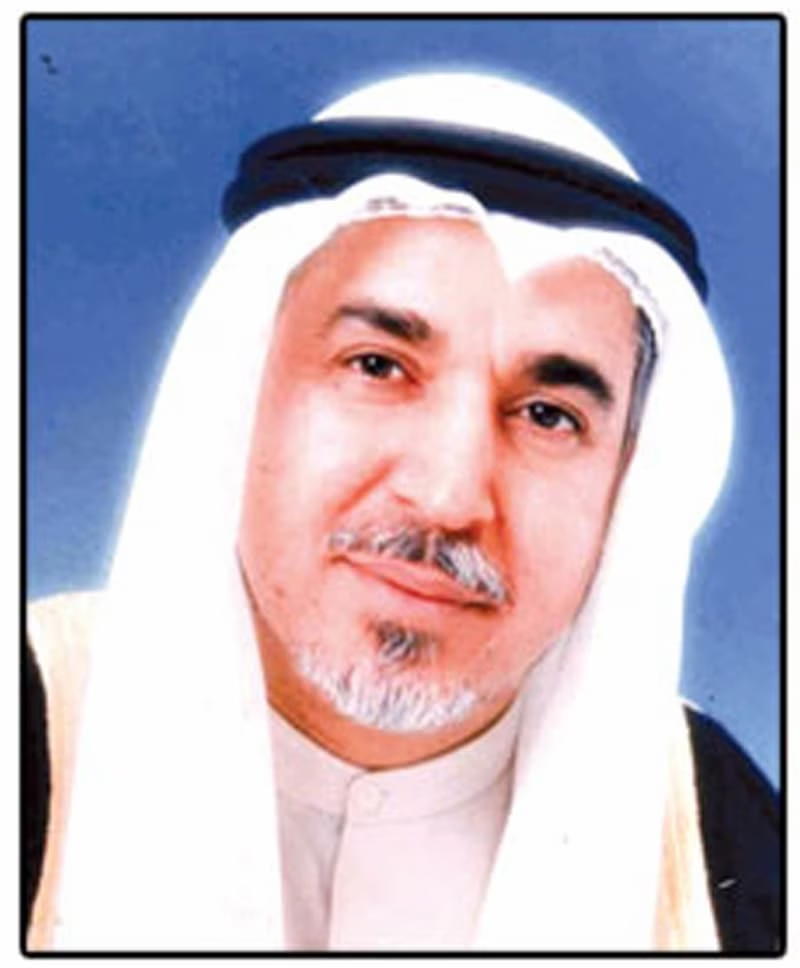
The absolute support he found from the Chairman of the Board at the time, Mr. Abdullah Ali Al-Mutawa, played the main role in the success he achieved, as well as from Dr. Ismail Al-Shatti, the Editor-in-Chief, and after him Dr. Muhammad Al-Busairi.
The Bosnia and Herzegovina War
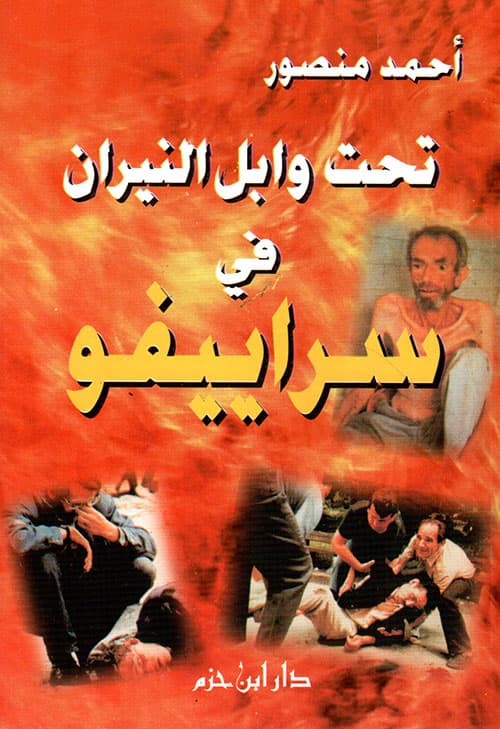
During his management of Al-Mugtama magazine, Mansour made several trips to and press coverages of many countries. His coverage of the Bosnia and Herzegovina war between December 1994 and January 1995, was a turning point in his press coverage. His entry to the capital city of Sarajevo, which was besieged at the time, was a big adventure, as he entered it through a tunnel that was dug by the Bosnians under the Sarajevo airport. It was the lifeline that the besieged city breathed through. After he entered the besieged city, he spent an entire month under the siege with its people in terrible winter weather, without electricity, heating, or basic necessities of life. (11) He conducted several interviews with politicians and military officials in Bosnia at the time, which were crowned by his interview at the presidential palace with the president Alija Izetbegovic, the creative thinker and politician who challenged the West and stood against the plan to liquidate the presence of Muslims in Bosnia and Herzegovina. He conducted an interview with him, and his deputy Ejup Ganic, which he published in Al-Mugtama magazine.
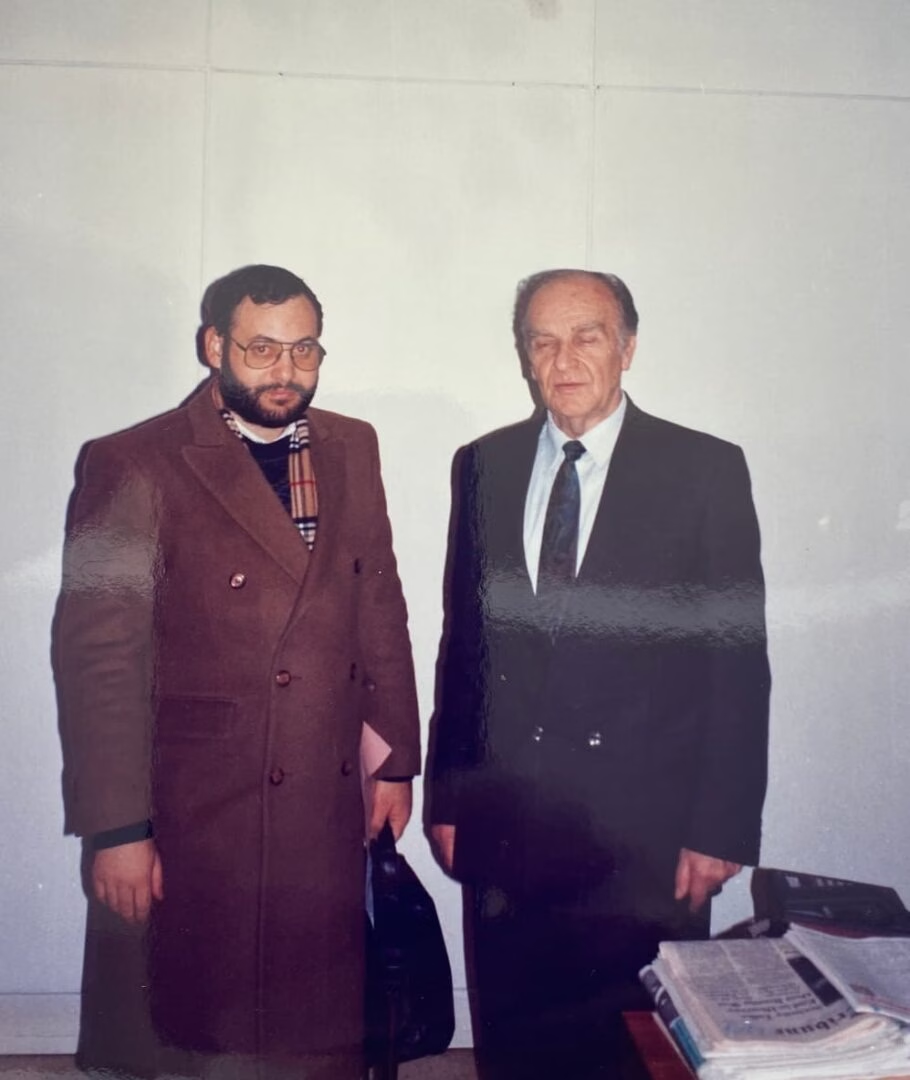
After working in Al-Jazeera, Ahmed Mansour returned and conducted a rare television interview with Alija Izetbegovic, which is considered a historical documentary for the man, who deserves a special place in history.
Ahmed Mansour published the details of his trip to Bosnia on the pages of Al-Mugtama magazine, as well as in his book Under The Hail Of Fire In Sarajevo. (12)
After Al-Mugtama
Ahmed Mansour’s ambition did not stop at being the managing editor of Al-Mugtama magazine, especially after making three trips to the US, during which he visited some newspapers, media outlets and research centers, and saw that many of the stars of US television shows at American tv stations achieved their success and stardom through their distinguished press backgrounds. They moved from the print press to presenting successful television programs. So, he began to think seriously about moving from print media to a wider audience and a more expansive field of journalism, i.e. television journalism, but at what television station could he find a high ceiling of freedom through which he can continue to present his message in life? The message that he says is based on increasing the area of awareness, knowledge, understanding, and freedom among people.
The desire to move to television journalism (1996)
Ahmed Mansour recalls that his colleague and friend, Asaad Taha (13), with whom he was working as a correspondent for Al-Mugtama magazine in Europe, informed him in the middle of 1996 that a news television station would be broadcasting from Qatar and that he was seeking to join its team, but its name and final image were not clear yet. He asked him for help and whether he knew someone in Qatar who could give him information about the emerging project. Ahmed Mansour contacted the Qatar correspondent for Al-Mugtama magazine at the time, Dr. Hassan Ali Dibba, who confirmed the existence of the project, but said that its buildings were still under construction and no date has been set for the launch. He gave him this information in the hope that it would be the television station he was looking for, but he decided not to rush to leave Al-Mugtama magazine until he was sure of the level of freedom the prospective TV channel would have, especially since the level freedom that the Kuwaiti Al Mugtama magazine enjoyed at the time was very high, to the extent that many of its issues were confiscated in some Arab countries, while other countries did not allow its distribution. Mansour waited for the launch of the new channel, and he remained hopeful until the end of 1996, when he was on a business trip to London and while visiting one of his friends, he told him that Al-Jazeera news channel had launched in Qatar and that it was unique in its style and its method of covering the news. They sat together and watched a news bulletin and part of one of the talk shows. The show was “More than an Opinion” hosted by journalist Sami Haddad, and before Ahmed Mansour got up, he said, “I found it, this is the television station that I wished would exist and could push me to move from written journalism to television journalism.” (14)
Al-Jazeera news channel (February 1997)
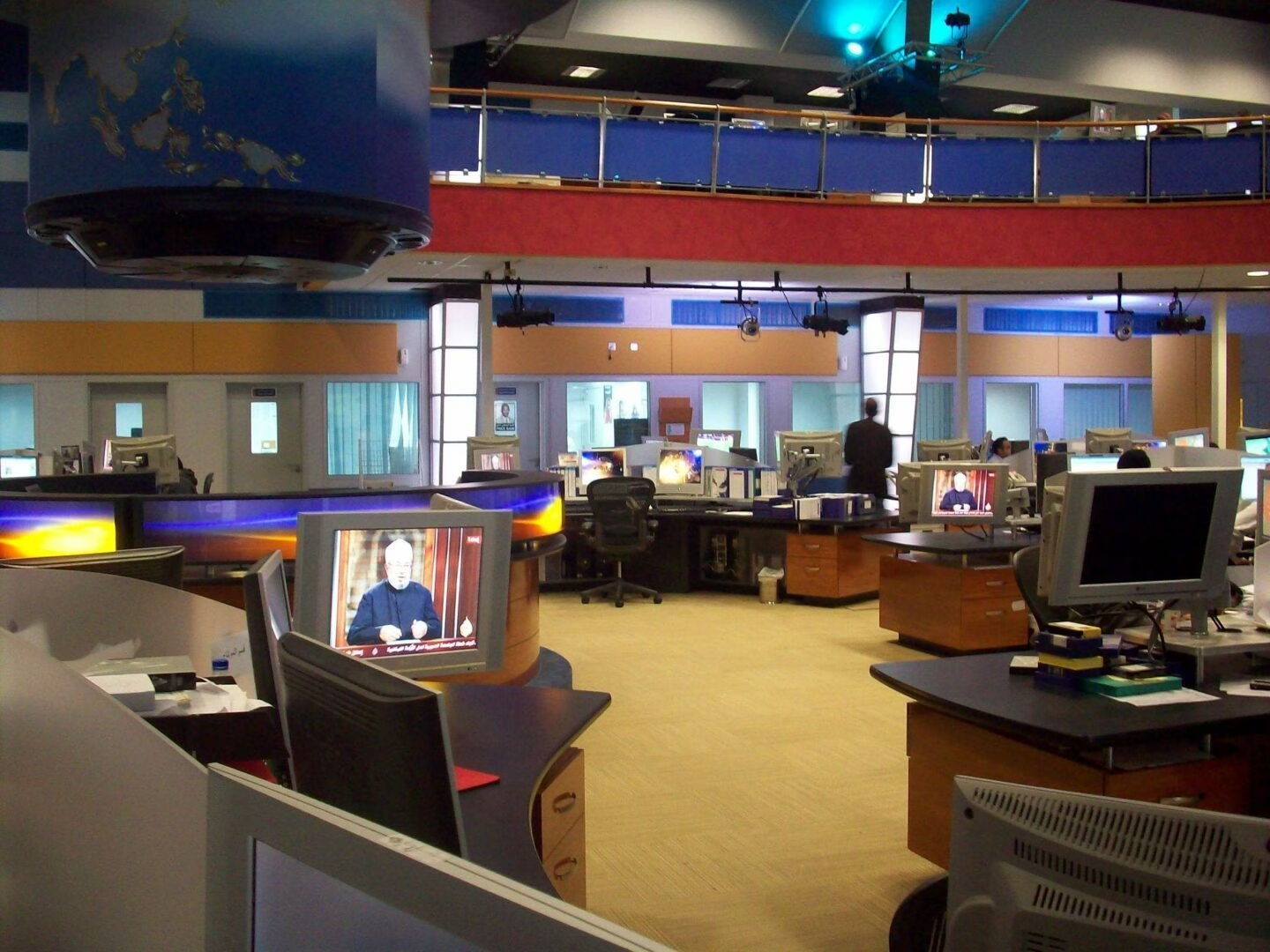
Ahmed Mansour returned to Kuwait with his eye on Al-Jazeera, after he realized that he had completed the phase of Al-Mugtama in his life and that he had reached his highest potential in it. He believed it was time for a professional move that was more ambitious. He had prepared a comprehensive resume about his professional life and publications, which reached ten books by then, and his articles, which were in the thousands. Then he proposed the idea for his programs “Without Borders”, which was the title of his weekly column in Al-Mugtama magazine, and “A Witness to History”. He began implementing this idea over the years of his coverage of the Afghan war between 1990 and 1997 by recording the experiences of the Afghan Mujahideen leaders. While he covered the Afghan war, he recorded the testimonies of Burhanuddin Rabbani, Abd Rab al-Rasul Sayyaf, Gulbuddin Hekmatyar and others on audio tapes, but he did not publish any of them and he still has them on audio tapes until now, and his dream now was to present these testimonies on television.
Mansour did not expect a quick response to his request from the Al-Jazeera management, but he was surprised by a call from the management setting a date for the interview in Doha at the beginning of February 1997. After a lengthy interview with the general manager Muhammad Jassim Al-Ali and the vice-chairman of the board of directors Mahmoud Al-Sahlawi, his appointment was approved, first as a journalist in the newsroom, and then he would start preparing his television shows after he finished the training period, which Mansour requested to be no less than 6 months so that he could learn the art of television journalism in depth.
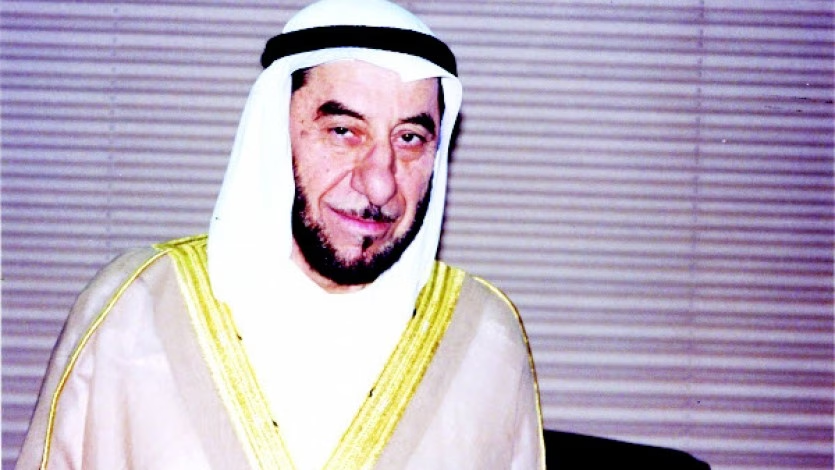
Abdullah Ali Al-Mutawa
Ahmad Mansour returned to Kuwait and submitted his resignation as managing editor for Al-Mugtama magazine, but he faced a major problem. The Chairman of the Board of Directors, Mr. Abdullah Ali Al-Mutawa, categorically refused his resignation and insisted that he remained at his job, and that if he had any financial or managerial demands, he would meet them. (15) Mansour had great respect for Mr. Abdullah Ali Al-Mutawa, as his relationship with him went beyond the limits of work, and extended to fondness, respect, and appreciation. Al-Mutawa used to treat Mansour like one of his sons and respected his professional distinction and dedication to work, and everyone who knew Al-Mutawa knew how special Ahmed Mansour was to him. A position none of the envious people who were filled with hatred and jealousy of Mansour and his professional successes succeeded in changing over nearly seven years of working together, instead the special relationship grew closer day by day. Mansour had full respect for this man whom he says he learned a lot from regarding the art of life, experiences, and wisdom. In addition to him being one of the most prominent businessmen in Kuwait, he had great political and life experience and soul and culture. He also had a knack for dealing with events with unmatched wisdom and firmness. He also had a wide network of relationships around the world, and he is respected by everyone inside and outside Kuwait.
Al-Mutawa spent a whole night until dawn with Mansour, along with the editor-in-chief at the time, Dr. Muhammad Al-Busiri, in an attempt to persuade him to withdraw his resignation, but Mansour told him that the matter was not about financial or managerial demands, but rather about professional ambition and stages in life and that he has played his part in Al-Mugtama and that this stage in his life has ended.
Finally, Al-Mutawa accepted his resignation and held a large honors ceremony, unprecedented for any expatriate who worked for Al-Mugtama for Mansour. It was attended by a group of Kuwaiti dignitaries and members of the National Assembly. During his farewell speech, Ahmed Mansour announced that he would move to work for Al-Jazeera at which point the hall erupted in applause, especially since Al-Jazeera had become the focus of everyone’s attention and was widely watched in Kuwait.
Ahmed Mansour will not forget how Mr. Abdullah Ali Al-Mutawa said in his speech, “Despite our sadness at Ahmed leaving us, and our keenness to keep him with us, we are happy that he is moving to this prestigious television station and we wish him success in his future endeavor.”
Mansour kept a friendly relationship and kept in contact with Mr. Abdullah Ali Al-Mutawa until his death, may God rest his soul, in September 2006.
From the newsroom to the screen (May 1997)
On May 5, 1997, Ahmed Mansour began his work at Al-Jazeera as a journalist in the newsroom. The Director-General of Al-Jazeera at the time, Muhammad Jassim Al-Ali, had tasked the news director, Salah Najm, to train Mansour on the arts and skills of television journalism. Mansour became a shadow of Salah Najm, who later became the director of news at Al-Jazeera English. Mansour always says, “Salah Najm is my first mentor in television journalism” and he still considers him his main professional reference to this day. He then learned from the top experts in television journalism on Al-Jazeera, Sami Haddad, Jamil Azar, Ahmed Al-Sheikh and others.
Three weeks after he joined Al-Jazeera, the Director General, Muhammad Jassim Al-Ali, asked him to conduct the first training for a television interview for the show “Today’s Meeting”. The guest was Khaled Meshaal, head of the political bureau of Hamas, who was on a visit to Doha. After Al-Jazeera’s management saw Mansour’s interview, they were impressed by the show, although it was still being tested, and decided to broadcast it on June 4, 1997. This was Ahmed Mansour’s first appearance on Al-Jazeera. (16)
After that, Ahmed Mansour was assigned by the channel management to host the show “Sharia and Life” for six months, which would cover part of his training period, after which he would host the two shows he proposed when he started working for the channel, i.e. “Without Borders”and “A Witness to History”. however, the success of “Sharia and Life” and its heading of the opinion polls by Al-Jazeera viewers prompted the management to extend his time hosting the show for an additional year, during which he started recording episodes of “A Witness to History.”
Sharia and Life (mid-1997)
Ahmed Mansour succeeded in transforming “Sharia and Life” (17) from being a religious show that focused on jurisprudential rulings and traditional topics to a modern program that addresses with people’s lives in the comprehensive concept of Islam. He touched on important topics in his program in the context of economy, politics, international relations, manners, behavior, and Muslims’ relationships with others. He would even bring together in his interviews Islamic and Sharia scholars with others specialized in medicine, economics, and other different life sciences. He even went so far as to bring together the Patriarch of Jerusalem, Michel Sabah, and Sheikh Yusuf Al-Qaradawi, in one of the episodes. He even went further than that when he presented special episodes for adults only that discussed marital relations under Islamic law, which caused a great uproar at the time, especially since it was with Sheikh Yusuf al-Qaradawi, who did not find the matter uncomfortable to discuss on air with viewers because it was related to matters of their religion and “there is no abashment in religion”.
Ahmed Mansour succeeded, through his handling of topics, his management of interviews, and his dealings with the audience, in making the program the top Al-Jazeera program in terms of viewership, before he moved to presenting his programs “Without Borders” and “A Witness to History.”
Two shows at once- February 1999
Ahmed Mansour presented the last episode of “Sharia and Life” in the last week of January 1999, and in the first week of February 1999, Al-Jazeera simultaneously launched his programs “Without Borders” (18) and “A Witness to History” (19). He was the only program presenter on Al-Jazeera who, for over 20 years, produced and hosted two major shows at the same time. This was a unique characteristic of his that was not granted to anyone else in the history of Al-Jazeera channel.
“A Witness to History” aired every Sunday and “Without Borders” aired every Wednesday. While on “Without Borders” he was talking to presidents, ministers, and political leaders as well as experts and decision-makers about current political issues, on “A Witness to History”, he was talking to former presidents, ministers and leaders about modern Arab history through the personalities that contributed to its making.
After Ahmed Mansour began presenting “Sharia and Life”, he began preparing for the launch of his programs “Without Borders” and “A Witness to History”. Since “A Witness to History” is a recorded show that requires great effort to prepare and to research major historical events, he started preparing it a full year before its launch, specifically the beginning of the year 1998. The idea of the show was new and aimed to re-read and write modern Arab history through those who made it, including presidents, ministers, heads of government, and former Arab leaders, and not through the official government narratives that are full of falsities.
Among the figures whom he recorded interviews with during the year 1998, the year before the launch of the program were Sheikh Ahmed Yassin, the founder and leader of the Islamic Resistance Movement Hamas, Prince Talal bin Abdulaziz Al Saud, who was called the leader of the free princes and who led a dispute with his brothers, the sons of King Saud between 1958 and 1961, during the rule of King Saud (20), Lieutenant-General Mashour Haditha Al-Jazy, former Chief of Staff of the Jordanian Army and commander of the Battle of Karameh, in which the Jordanian army and the Palestinian fedayeen defeated the Israeli army, which lasted one day on March 21, 1968. Mansour also prepared a complete plan for a full year of topics and guests for his other show, “Without Borders.”
A Witness to History… interviewing witnesses
Ahmed Mansour says that he used to spend months reading and preparing using history books and various sources for each guest on “A Witness to History” and he adopted an unusual approach to interviewing the guests on the show. He assumed the part of an investigative journalist interviewing the witness, and he sought to document the facts of history with the witnesses either confirming or denying them, by questioning them about incidents and documenting events.
Mansour would sit for several hours with the guests during the preparation period for the show and he would collect information about their biography. Then, he would study the life and career of the witness and what has been written about them, as well as the events they participated in and witnessed, and then he would record the episode with them. He recorded hundreds of hours of testimonies with dozens of witnesses, covering the entire Arab world, from Iraq and Syria in the east, to Morocco and Mauritania in the west. These testimonies became a recorded historical document illustrating the events of modern Arab history through the figures that made history or participated in its making.
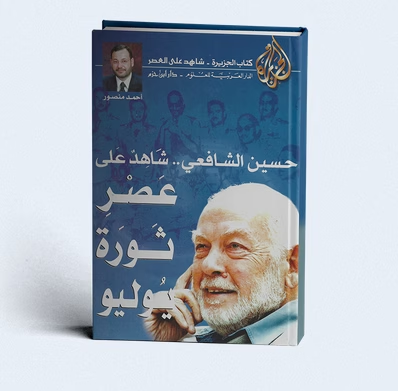
Among the most famous personalities with whom he recorded testimonies, in addition to those mentioned earlier are the former Yemeni Prime Minister Mohsen Al-Ayni, the former Lebanese President Amin Gemayel, the former Syrian President Amin Al-Hafez, the former Iraqi Prime Minister Aref Abdel-Razzaq, former Chief of Staff of the Egyptian Army and the man who came up with the victory plan in the October 1973 war (21) Lieutenant General Saad Eddin Al-Shazly, the former Egyptian Vice President Hussein al-Shafi’i, the former Prime Minister of Egypt Mustafa Khalil, the former Secretary-General of the United Nations Boutros Ghali, and the first president of the Libyan National Council Muhammad al-Maqrif. He also interviewed a number of leaders, including Hassan al-Turabi and Al-Sadiq al-Mahdi from Sudan, President Moncef Marzouki, Ahmed Al-Masteri, and Abdel-Fattah Moro from Tunisia, President Ahmed Ben Bella, and Foreign Minister Ahmed Talib Al-Ibrahimi from Algeria, Foreign Minister Abdel-Hadi Boutaleb, one of the officers participating in the Skhirat coup attempt in 1971, Ahmed Al-Marzouki, and aircraft commander in the coup attempt by Oufkir Ali Hassan II in 1972, Saleh Hashad, and Salih Ould Hanna from Mauritania, who led more than one attempted military coup. Among the historical figures whose testimony was recorded by Ahmed Mansour is the Prime Minister of Malaysia and the creator of its modern rise Dr. Mahathir Muhammad, and many others.
Ahmed Mansour published the testimonies of some of the guests in a book after editing and revising them. The show “A Witness to History” has become an essential historical reference for the history of Arab countries and many of their rulers and governments (22).
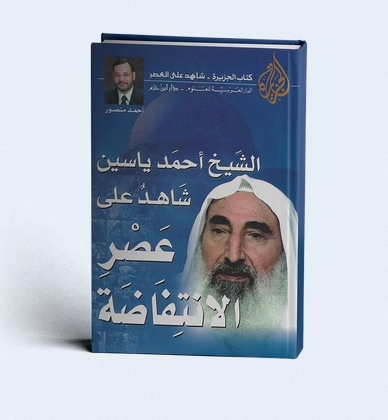
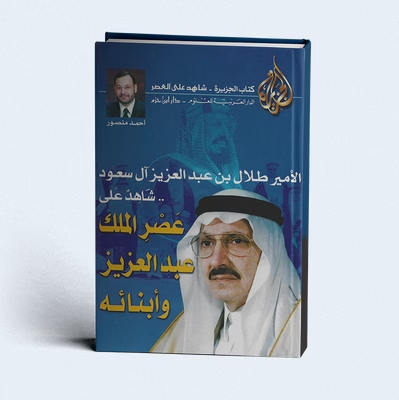
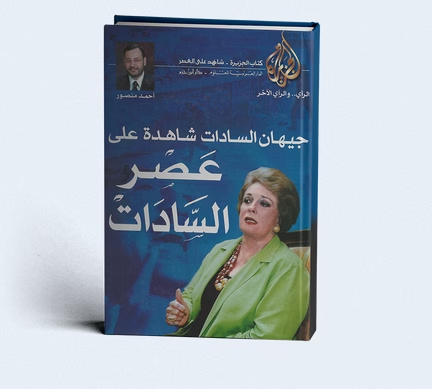
Without Borders… The voice of the other opinion against decision-makers
As for the “Without Borders” show, he would hold discussions live, on air, with decision makers, politicians, and thinkers. Hundreds of leaders and politicians, as well as Arab and foreign officials participated in it.
For example, among the politicians are Hamad bin Jassim, the Prime Minister and Minister of Foreign Affairs of Qatar (23), Ali Abdullah Saleh, the former President of Yemen, Omar al-Bashir, the former President of Sudan, Turkish President Recep Tayyip Erdogan, the President of Austria Heinz Fischer, Austrian right-wing leader Jorg Haider, and the President of Finland, Tarja Halonen, and other heads of state, and many Western and Arab ministers and officials.
Ahmed Mansour took a unique and unprecedented approach in his program “Without Borders”, as he represented the other opinion against his guests, and adopted the other point of view. This meant that he adopted the position against his guest, which created a sharp, strong, and exciting discussion with his guests and the political ones, in particular. This made the show especially successful and set it apart from his other shows. (24)
Ahmed Mansour presented his shows for about a quarter of a century, which is the history of Al-Jazeera. The total number of hours he hosted is over 2,500 hours of television talk shows.
Covering the Battle of Fallujah (April 2004)
The battle of Fallujah occurred in Iraq in April 2004, and it was one of the decisive battles in the history of the American occupation of Iraq. Al-Jazeera had prepared a special coverage to commemorate the first anniversary of the US occupation of Iraq. It tasked its main news and show hosts to prepare it, including Ahmed Mansour, who was assigned to cover the events from the city of Fallujah, while his colleague Mohammad Krishan was in Baghdad, and Abdul Qadir Ayyad was in southern Iraq.
However, Fallujah was besieged by the American forces one night before Ahmed Mansour and the Al-Jazeera team arrived, and the American forces surrounded the city from every side, but Mansour and the Al-Jazeera team managed to pass through the siege and enter the city through an unpaved desert road. The Al-Jazeera team was the only television team that managed to get through the siege imposed by the US forces on the city and they managed to enter Fallujah while it was surrounded.
The reason for the American forces’ siege of the city is that on March 31, 2004, some members of the Iraqi resistance ambushed a car containing contract mercenaries from the American forces, affiliated with the Blackwater Company, which was supplying the American army with mercenaries, and whose soldiers committed heinous war crimes in Iraq, and the mercenaries were burned inside the car after it was directly hit by a shell. However, the residents who were subject to great harm from the American forces and mercenaries over an entire year of occupation, were not satisfied with only killing the four mercenaries, but rather dragged their bodies in the streets of the city, then some residents hung the bodies afterwards on a bridge that overlooks the Euphrates River on the outskirts of the city.
The incident could have passed like many other similar incidents, had it not been filmed by many and most American and international media outlets broadcasted it. This was reminiscent of the incident of American soldiers being dragged through the streets of Mogadishu in Somalia, after two American Black Hawk helicopters were shot down on October 3, 1993. At that time, the international media broadcasted pictures of Somalis, including children, dragging the corpses of American soldiers and pilots in the streets. The incident was documented in a book and a movie called Black Hawk Down, and it led to America’s failure, defeat and withdrawal from Somalia.
The whole scene got back to the US and the media after the mercenaries were dragged into the streets of Fallujah on March 31, 2004, and US President George Bush and his entire administration were put in an awkward position, so Bush decided to besiege Fallujah and destroy it over the heads of its people.
The American siege was tight, but Mansour and the Al-Jazeera team were able to infiltrate it and enter the city, changing the entire equation of the battle, as he and the Al-Jazeera team managed to cover the events from inside the city live around the clock, for more than a week, making Al-Jazeera the only source of what was happening in Fallujah. It was also the only source for all the international television channels. Ahmed Mansour narrated the full details of the battle and its consequences in his book Battle of Fallujah: America’s Defeat in Iraq (25), which was translated into English and published in the US and UK under the title Inside Fallujah: the Unembedded Story (26).

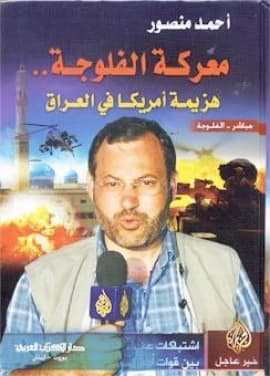
Fierce US attack on Ahmed Mansour
Al-Jazeera‘s coverage of the battle of Fallujah (27) led to the US being very angry at Al-Jazeera and Ahmed Mansour (28), who was covering the events from inside Fallujah with the Al-Jazeera team, and even angry at the State of Qatar. The deputy director for operations/chief military spokesman for the forces in Iraq, General Mark Kimmitt, repeatedly attacked Ahmed Mansour by name in the press conferences (29) that he held daily that he used to hold on a daily basis in Baghdad. He was accused of promoting lies from the city, even though all his reports were filmed and live on air in many cases. General Mark Kimmitt also attacked him on Al-Jazeera while in an interview with Mansour’s colleague Mohammad Krishan, who replied to the US official spokesman that Ahmed Mansour was just portraying images and the images do not lie. However, Kimmitt insisted on continuing to attack Ahmed Mansour in front of journalists at the press conferences he was holding in Baghdad. US State Department spokesman Richard Boucher also launched an attack on Ahmed Mansour during his press conference at the US State Department headquarters during the visit of the Qatari Prime Minister and Foreign Minister Hamad bin Jassim to Washington on April 27, 2004. This was one of the rare times in which a journalist was subjected to a direct attack on them personally by senior American officials due to his press coverage of the events. The American Secretary of Defense attacked Al-Jazeera‘s reports from Fallujah, as well as the official spokesman for the British forces. Ahmed Mansour included the complete details of these events in his book Battle of Fallujah: America’s Defeat in Iraq, and there are links to these statements.
Bush decides to bomb Al-Jazeera
The matter did not end at attacking Al-Jazeera and Ahmed Mansour’s coverage of the battle of Fallujah. It went as far as the US President George Bush deciding to bomb the headquarters of Al-Jazeera channel. The UK’s Daily Mail newspaper reported that George Bush decided to bomb the headquarters of Al-Jazeera channel in Qatar in response to its coverage of the Battle of Fallujah and inciting the international public opinion against the war crimes committed by the American forces there against civilians (30). A symposium was held in the British capital, London, attended by the director of Al-Jazeera Network, Waddah Khanfar, with the editor-in-chief of the Daily Mirror and others, in which the editor-in-chief of the Daily Mirror confirmed that he had a document proving that Bush decided to bomb the Al-Jazeera headquarters, and that the one who dissuaded him from doing so was British Prime Minister Tony Blair, noting that the document was leaked from his office, and the employee who did that was later dismissed. However, Waddah Khanfar mentioned in an interview that he visited Washington, DC afterwards and met with Deputy US Secretary of State Richard Armitage, who was present at the meeting that included Tony Blair, Secretary of State Colin Powell, and Deputy Secretary of State Richard Armitage, and who said that Bush did indeed make this decision, but that the person who dissuaded Bush from the decision was not Tony Blair, but Secretary of State Powell, who told him that doing this will destroy America’s credibility with regard to media freedom and that he would be subjected to an unprecedented attack from the American and international media, which will destroy his status. Ahmed Mansour mentioned the full details of this in his book Battle of Fallujah: America’s Defeat in Iraq.
Ahmed Mansour’s coverage of the first battle of Fallujah in April 2004 remained a milestone in his professional history and the history of Al-Jazeera’s coverage of wars.
Physical attack on Ahmed Mansour in Egypt (November 2005)
Ahmed Mansour’s boldness and courage in addressing many thorny issues with his guests, including leaders, rulers, political officials and decision-makers, was the cause of many troubles that he faced in his life, including the assault that occurred on him in Cairo on November 9, 2005, during the parliamentary elections that were taking place at that time.
Ahmed Mansour had prepared a series of interviews with the leaders of the main parties in Egypt, including the ruling National Democratic Party, as he arranged for an interview with its Deputy Secretary-General, Minister Kamal El-Shazly, for the episode on Wednesday, November 2, 2005, but El-Shazly cancelled at the last moment despite the episode being announced on Al-Jazeera. Kamal El-Shazly refused to respond to Ahmed Mansour’s repeated calls, which forced Ahmed Mansour to contact the Secretary-General of the ruling National Democratic Party at the time, Minister Safwat Al-Sharif, who promised him to discuss the matter. However, Al-Sharif then refused to answer Mansour’s calls after that. This prompted Mansour to launch an overwhelming attack on them during the introduction to his show “Without Borders” live during the episode on Wednesday, November 2, 2005, after he gave a full explanation to the viewers about what happened. This prompted many to warn Mansour of the consequences of his actions, as both Safwat Al-Sharif and Kamal Al-Shazly have great influence in the Egyptian state institutions.
In the following episode on Wednesday, January 9, 2005, while Mansour was waiting for the head of the Wafd Party, Dr. Noman Gomaa, in front of the building where Al-Jazeera’s office is located in Abdel Moneim Riyad Square in central Cairo, as Gomaa was his guest in the episode of “Without Borders” that night (32), two strong men approached him, and after making sure of his identity, each of them asking him several times if he was Ahmed Mansour, and he answered yes to both of them, given the fact that many people asked to take pictures with Ahmed. However, they attacked him in the blink of an eye, beating him severely, punching and kicking him (33), and they told him that this message was from Muammar Gaddafi, the President of Libya. Mansour fought back and resisted, and before anyone could stop them or catch them, they fled amid the shock of the people who were standing by, meaning they were well trained.
Moments later, Dr. Noman Gomaa arrived, and Mansour accompanied him to the studio, and he appeared live on-air minutes after being attacked, with the marks of the beating visible on his face, in an episode that people did not forget. He sent an urgent appeal to the Minister of Interior at the time, Habib Al-Adly, on-air and explained to the viewers what he was subjected to (34 ). Although the Public Prosecution’s Office investigated the matter, it did not yield any results (35), as fingers seemed pointed at the Egyptian security, or the thugs of the National Democratic Party, because of Mansour’s attack in the previous week on both Kamal Al-Shazly and Safwat Al-Sharif. It seems that what the two attackers said as they beat him that it was a message from Gaddafi was nothing but an attempt to distract from the real attacker. Mansour was surprised later on to find that what happened was actually a personal message from Muammar Gaddafi.
Assassination attempts by Gaddafi intelligence
At the end of the year 2011, Ahmed Mansour was surprised by a call from one of the security officials in Libya after the fall of Gaddafi, Major General Abd al-Rahman bin Ghuwailah, informing him that the two people who attacked him in Egypt in 2005 were actually Libyans who were working for the Libyan intelligence and that they were detained and confessed to the crime, along with other crimes they had committed. This included an attack on the Saudi Foreign Minister Saud Al-Faisal in the Semiramis Hotel in Cairo before that. Their biggest crime, however, was their participation in the Abu Salim prison massacre that took place on June 29, 1996.
Mansour had met Major General Bin Ghuwailah at the house of his brother, the journalist Abdul Basit bin Ghuwaila, while Mansour was covering the situation in the Libyan capital, Tripoli, after the fall of Gaddafi and his regime.
Ahmed Mansour immediately headed to Tripoli, and Major General Abd al-Rahman bin Ghuwailah arranged for him to meet with the two Libyan intelligence agents, as they were detained in the central prison in Tripoli with many of the men of the Gaddafi regime. Mansour recognized them as soon as they arrived, as each of them had unique physical features. He sat with them for over two hours in prison, in the presence of Major General Abd al-Rahman bin Ghuwaila and Assistant Minister of Defense at the time, Khaled al-Sharif, as the meeting was in his office. Ahmed Mansour questioned them for over two hours and they explained to him, in the presences Major General bin Ghuwaila and Mr. Khaled al-Sharif, all the details of the assassination attempt against him that Gaddafi wanted to send a message through to all Arab journalists and media professionals who had begun to cross him and his children at that time. They told him that he was chosen as the most prominent figure and because he worked for the most prominent international Arab television station, Al-Jazeera. They also confirmed that the Libyan intelligence sent three other teams before them to make an assassination attempt on his life, but they failed and that they were rewarded for their actions with $100,000 that they had received from Abdullah Al-Senussi, the director of Libyan intelligence at the time (36).
Mansour says that he received more than one message prior to this attack stating Gaddafi’s personal hatred for him, as he used to disclose this even to the Qatari officials who visited him, and one of them told him that Gaddafi insulted Mansour several times in front of them, and this may be one of the reasons why he was chosen as a target of this obsession that consumed Gaddafi. He did not shy away from attempts to shed the blood of all those who opposed him or exposed his crimes in the media. He has killed a number of Libyan journalists, most notably the prominent Libyan journalist, Muhammad Mustafa Ramadan, the BBC presenter, who was assassinated by Gaddafi’s intelligence in the British capital, London, on April 11, 1980.
When Mansour asked the two men about the reasons why they aimed for his head when beating him, stating that this could lead to death, serious injury, or permanent disability, their response was that this was deliberate. They told him that they had remained hidden in Cairo for an entire month after the operation in one of the apartments belonging to the Libyan intelligence, and they lived in great fear, as Gaddafi was not accused of the incident by any of the media outlets after fingers were pointed at the Egyptian security agency. They even told him that the Libyan intelligence seriously considered turning them in and handing them over to the Egyptian regime, so that the goal of the assassination attempt would be achieved, i.e., spreading the news that Gaddafi and his regime was behind the assassination attempt. However, it seems they changed their mind in the end and they secured their return to Libya through the security officers at the embassy in Cairo. The Libyan intelligence officer who ranked as a major had supervised the implementation of the operation and followed up on every step until they returned to Libya.
When President Ben Ali stole his bags (August 2010)
In the summer of 2010, Ahmed Mansour was in the French capital, Paris, preparing to record his show, “A Witness to History” with Ahmed Bennour, the former Tunisian Minister of Interior and Defense during the rule of President Bourguiba, who was living as a political refugee in Paris, fleeing the Zine El Abidine Ben Ali regime. Mansour was staying at the Pullman Hotel, where the headquarters of the French National Union of Journalists is located and adjacent to the exhibition spaces. One day, Mansour was surprised by the disappearance of his bags from the hotel with all its contents, and two Tunisian employees who were working at the reception disappeared with them. They recognized Mansour from the first day and were keen to offer him their services and keep track of his movements, but he did not know that they were part of a network set up by Tunisian intelligence in France that includes hundreds of people working in hotels, restaurants, taxi drivers, and grocery stores in order to monitor the movements of Tunisian dissidents who were causing a nuisance to Zine El Abidine Ben Ali and his wife. This was especially after the publication of the book Regent of Carthage that exposed unprecedented scandals related to Ben Ali’s wife and her family and the scandals she caused in Tunisia, many of which were later revealed by the Tunisian revolution.
Mansour informed the French police after the hotel manager was unable to explain the disappearance of his bags. The French police took the matter seriously and raised the investigation from the level of a theft, referring it to the French intelligence office, which took over the case at higher levels after contact was made at the senior level by the Qatari ambassador to Paris at the time, Muhammad Jaham al-Kuwari and Ahmed Bennour, when he learned about the matter. He explained it as Ben Ali’s intelligence carrying out the operation, and that they had monitored Ahmed Mansour’s repeated visits to Bennour’s house in Paris. They had planted a grocery store in front of his house where Tunisian informants work to monitor the movements of Bennour and those who visit him, and it is certain that they realized from Mansour’s repeated visits to Bennour’s house for a whole year that took place before recording the episodes, that he was preparing for recording an interview with him. They may have thought that the bags contained the recorded tapes, so they stole them and may have had them transported to Tunisia.
Mansour narrated the whole story in several articles under the title “The President Who Stole My Bags.” (37)
After the Tunisian revolution, Mansour met with Beji Caid Essebsi, who took over the government after the revolution and then the presidency. He asked him about his bags that were stolen by Ben Ali in Paris and whether there were any traces of his bags in Tunisia or if there was information on who stole them, especially since French intelligence had shown Mansour the tapes of the hotel’s cameras, showing the entire operation and the people carrying it out. The French told him that the actions by Ben Ali’s regime was considered an attack by the intelligence of a foreign country on French soil without permission, and that this troubled them. They were busy exposing this network and who was running it, but the case was closed afterwards, not only because of the fall of the Ben Ali regime, but also because of the close cooperation between the two countries’ intelligence agencies.
His arrest in Germany (June 2015)
Ahmed Mansour played a prominent role in the January 25 revolution in Egypt, which went beyond his role as a journalist to his being an Egyptian citizen who cares about Egypt like all Egyptians (38). A heated argument took place between him and Abdel Fattah El-Sisi in the aftermath of the Mohamed Mahmoud massacre that took place in November 2011, in which hundreds of Egyptian revolutionaries were killed and injured (39), which was considered the real second wave of the January 25 revolution. Mansour had gathered evidence proving the involvement of the intelligence agency, which was headed by Abdel Fattah El-Sisi and the military branch known as Battalion 777, which was originally specialized in combating terrorism, in that massacre.
Mansour confronted Al-Sisi with the information he had about that massacre, including the names of the officers who were involved in it. That meeting took place between them in the Military Intelligence building in Heliopolis, with Major General Abbas Kamel, who was the director of Al-Sisi’s office at the time, attending the end of the meeting. Al-Sisi became very angry with Mansour, and an argument took place between them. Mansour paid the price for this later when he was falsely implicated in a torture case that took place in Tahrir Square against an individual during the January 25 revolution. False charges were brought against him and he was sentenced to imprisonment in absentia as an attempt of character assassination by the regime against him, and he was criminally prosecuted through Interpol.
This led to his arrest in Berlin on June 20, 2015, following a visit by Abdel Fattah El-Sisi to Germany. (40)
Although after his arrest, Mansour submitted a document to the German authorities from Interpol stating that Interpol was not pursuing him internationally, and requested that member states not prosecute him because the second protocol applies to him stipulating not prosecuting those wanted on political or religious indictments, but the German authorities insisted on his arrest. The police director in Berlin told him, in the presence of his lawyer, that this is a German decision, and the German officials, whom Mansour met after that, confirmed that the matter was decided through arrangements between German officials and the Sisi regime. One of them was working at the German embassy in Cairo and had close relations with Israel, as Israel directly promoted Sisi and his regime and arranged his trips and relations with the Germans and Europeans after his coup
Mansour told the details of his arrest in an episode of “Without Borders” (42) ,he also published several articles about the matter. Many details about the matter were also published in many international newspapers. Mansour later obtained his entire case file from the German authorities, and he says that it contained over 200 pages, and included German and Egyptian documents, telephone calls, and letters between the various authorities in Germany.
The file also includes all the details of his arrest, from the moment of his arrest at Berlin Airport, until his release from Moabit prison in the capital, Berlin. He said that it contains shocking details that he will reveal later. (43)
However, the fact that the German authorities fell into a major legal crisis and the massive attack they were subjected to by the German press and politicians, prompted them to close the case file and release him, after scandals began looming on the horizon that would affect German officials in various positions colluding with the Sisi regime.
The former leader of The Green Party in Germany, and the head of the legal committee in the German parliament at the time, Renate Kunast, received Mansour after his release in her office in Parliament, and informed him that because of his case, the extradition laws from Germany had been changed. They had become stricter than before in order to protect wanted individuals, especially those involved in political cases who are put on lists by authoritarian regimes. (44)
Ahmed Mansour’s arrest in Western media
The arrest of journalist Ahmed Mansour occupied the Arab and German media, as well as Western media in general. It was top news in the German and Western media, in addition to Al-Jazeera (45), and dozens of reports and articles were written throughout his arrest and until the German authorities released him without conditions or investigation on June 22, 2015. Among these reports are the following:
“Germany is facing a very sensitive legal and political issue, as Ahmed Mansour, one of the most famous journalists in the Arab world, is still threatened with extradition. The Berlin Court of Appeal must rule on this.” (46) has to decide on that (46).” Frankfurter Allgemeine Zeitung newspaper- June 21, 2015
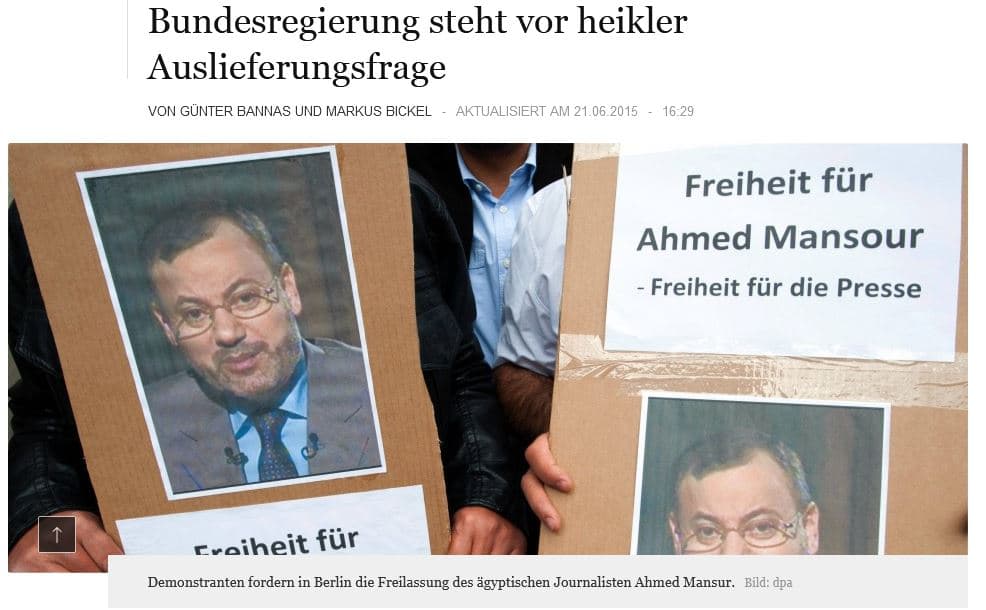
“If the Egyptian authorities had conducted their investigations this time – unusually – correctly, then it would have been more appropriate for them to send the results of the investigations to Britain, as the detained journalist holds their citizenship, but it seems that Cairo wants to make an example of him. Therefore, Germany should not join this game.” (47)
Frankfurter Allgemeine Zeitung newspaper- June 21, 2015
“Turkish President Recep Tayyip Erdogan criticized the German authorities’ arrest of the Egyptian presenter at Al-Jazeera news channel, Ahmed Mansour, last Saturday, accusing Germany of acquiescing to the requests of the ‘coup authorities’ in Egypt” (48)
Turkish Anadolu news agency- June 22, 2015
The arrest was also condemned by Time magazine (49), The Guardian (50), and ABC (51).
“Prominent German politicians are calling for the release of Ahmed Mansour” (52)
Deutsche Welle– June 21, 2015
“German media organizations condemn the arrest of Mansour” (53)
Al-Jazeera – June 22, 2015
The Road to Stardom
This is the latest television show that Ahmed Mansour is currently working on (54), and he says that this documentary talk show is unique and unprecedented. It monitors the professional experience of Al-Jazeera Network and the reasons for its professional success, even breaking the Western monopoly over the news industry, becoming one of the most important news networks in the world. He draws a comparison between its professional approach in television journalism and that of the Western news networks, especially the British and American networks, through dozens of interviews he conducted with the first generation of Al-Jazeera, including managers, journalists, and the stars of its shows and news. He also referred to more than 500 hours from Al-Jazeera’s archive to document this channel’s unique approach to television journalism. Mansour also said it was a difficult and strenuous task, but it will be a milestone in his professional history and the history of Al-Jazeera. It also draws attention to its unique school of thought and practical applied approach in television journalism. It will also become a professional guide for all media professionals working in the field of news and television journalism in general. Ahmed is also writing a book about the same topic and content, hoping that it will be a reference taught as an applied curriculum in some universities. He hopes to finish this project, which is no less than 50 documentary interview episodes about Al-Jazeera’s approach to television journalism before the end of 2023.
At the same time, Ahmed Mansour says that he has put the final changes on a unique show in television journalism that he will start on as soon as he finishes the big, exhausting project “The Road to Stardom.”
Ahmed Mansour says that the employees working in the fields of journalism and writing are among the individuals who do not retire. It is a prestigious position based on spreading awareness among people, and this is a task that does not end until death. Everyone who works in the field, he says, must be keen to spread their message as long as they can and as long as they have the ability and strength to do so.
Publications and articles
Before Ahmed Mansour joined Al-Jazeera, he had published more than 10 books, and published more than 2,000 articles and investigative pieces.
After moving to Al-Jazeera, he used to write a weekly article in Qatar’s Al-Watan newspaper, which then became a daily article for more than ten years. His articles were published in many Arab newspapers, such as Al-Watan, Al-Shorouk, Egypt’s El-Aosboa, Oman’s Al Shabiba, Morocco’s Al-Massae, and several other newspapers. The total number of articles he published is over 6,000 articles.
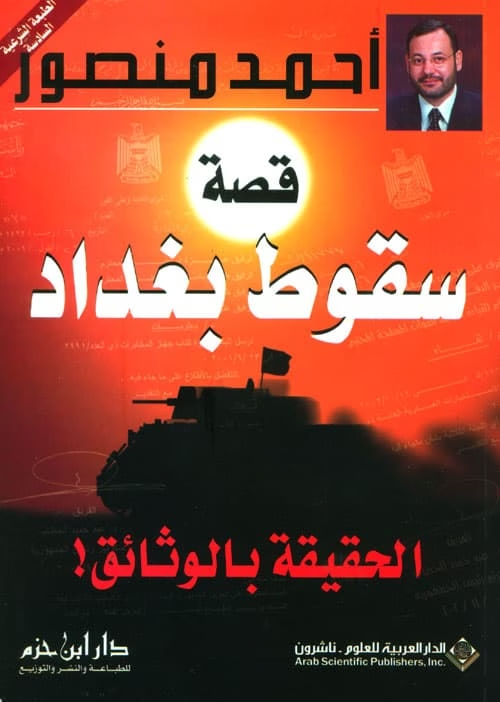
As for the books, he published more than 25 books (55), the most famous of which are the ones that cover wars, including Under the Hail of Fire in Afghanistan, Under The Hail Of Fire In Sarajevo, The Story of the Fall of Baghdad (56), Inside Fallujah: the Unembedded Story, America’s Crimes in Iraq, and Chaos Culture. Some of his books have been translated into different languages (57).
Professional Legacy
After forty years of working in journalism in all its print and television forms, Ahmed Mansour was keen to gather his professional legacy by creating a website (58) that includes all his work. He was also keen to communicate with new generations through all means of social media, as millions around the world follow him. (59)
Qualification and training
After moving to Al-Jazeera, Ahmed Mansour received extensive training from Al-Jazeera television journalism experts Sami Haddad, Jamil Azar, Salah Najm, Ahmed Al-Sheikh and others.
He also took more than 20 training courses in television journalism, including 10 courses over a period of 3 years, by David Simon, whom Mansour considers one of the most distinguished figures from whom he learned. Simon is a former director of the BBC, and the total hours he obtained from him amounted to about 600 hours on television presentation, episodes, war correspondence, managing press teams, comprehensive journalism, and other courses (60).
He also took courses from other British and American experts. He sought to build and improve himself through good training until he became one of the distinguished trainers in the field of television journalism, providing training for his colleagues. His shows also became a renowned applied school of thought in television research and hosting. Ahmed Mansour started his media work as a war correspondent covering the Afghan war that lasted years. This was an opportunity that rarely came by twice for journalists. In his course “The Role of the TV Correspondents in the Fields of War,” he watched coverage of the most famous war correspondents who work for international television stations and their various methods of coverage.
His view on the concept of neutrality in media
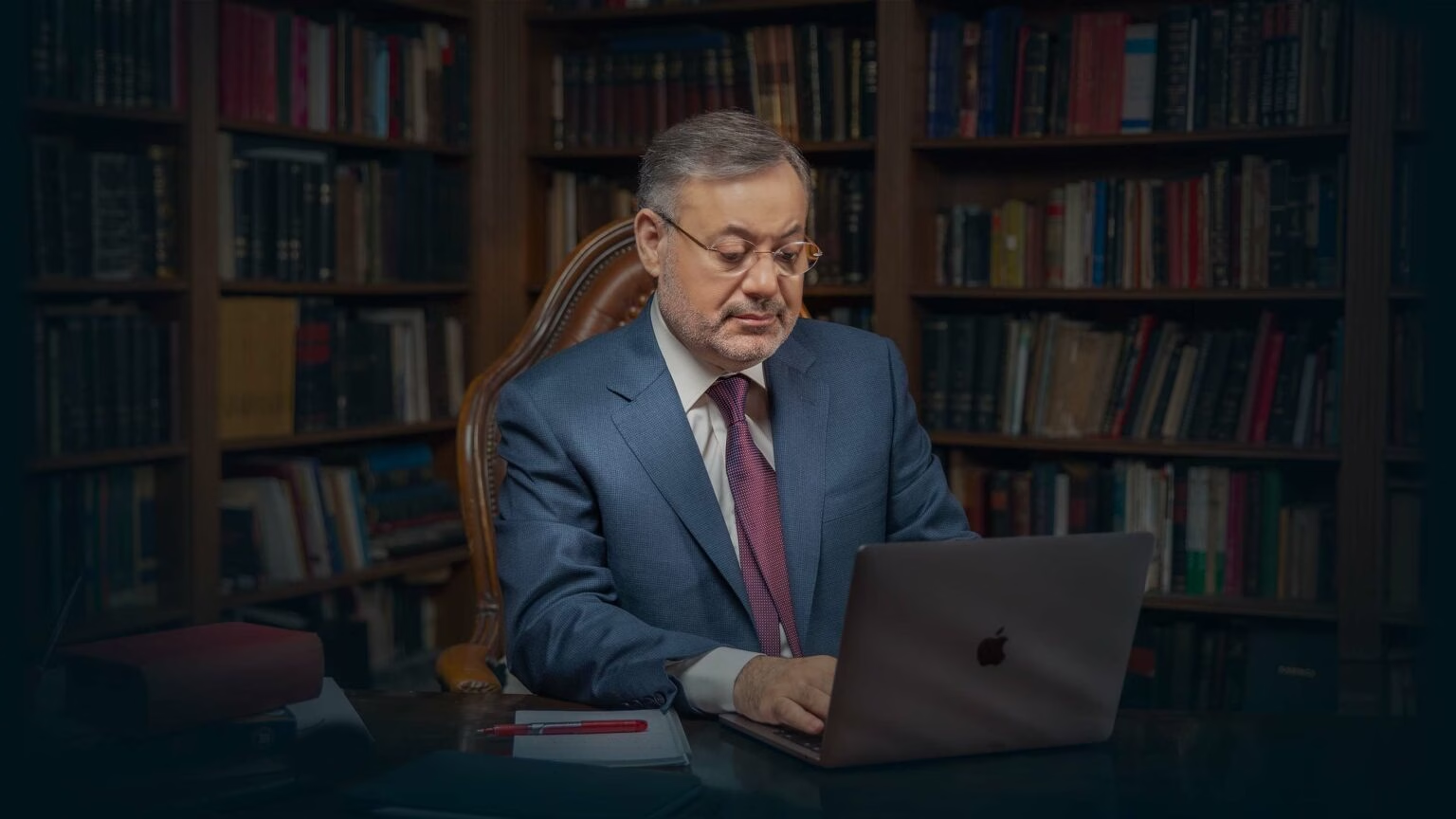
Ahmed Mansour believes that there is no such thing as neutrality in the media (61), but rather there is the truth that everyone should strive to show, and they must side with this and must be objective. He believes this is the main mission of a journalist in life. As for media neutrality, he believes it is a lie, saying, “I always reiterate that I will not be completely neutral, but I will always be biased towards what I believe is the truth and what is right.”
Ahmed Mansour explains that a journalist should not be biased towards merely reporting the facts, but rather they should convey the truth, and the truth has a broader meaning than just describing reality. It means to show the various different sides of a crime that was committed or the injustice that occurred. This is not easy for many journalists, but this is what should be done and they should side with the truth.
In one of his articles, Mansour quoted a phrase he heard from the prominent Arab historian and thinker, Dr. Abdel-Wahab El-Messiri – may God rest his soul- when he once discussed with him the topic of “neutrality” in political, media and creative work. El-Messiri said, “I didn’t excel in my work until I gave up so-called ‘neutrality’”. He wrote several articles about neutrality in the media and wrote a chapter on that in his book on the battle of Fallujah.
Professional activity and intellectual and media project
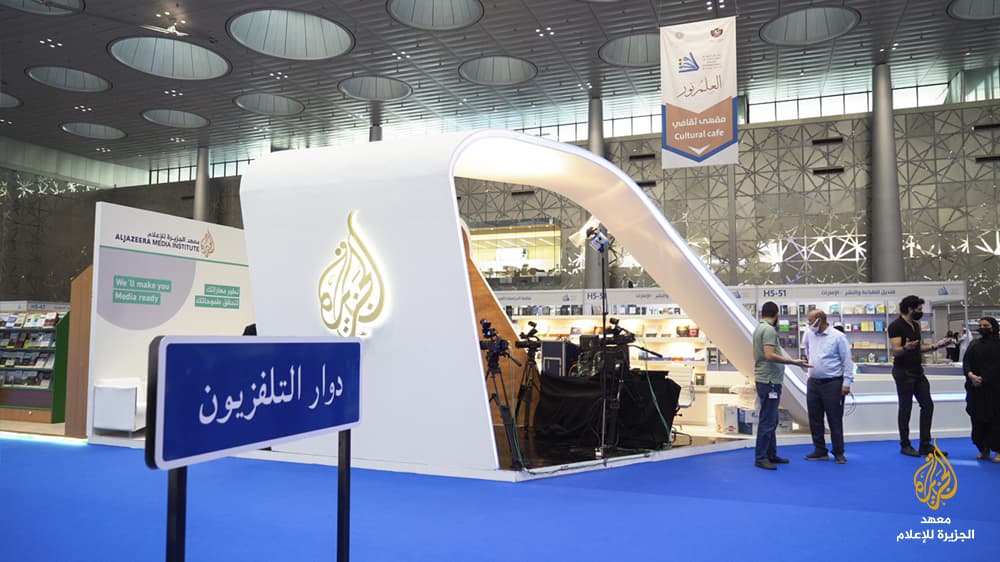
Ahmed Mansour is keen to share his professional experience and expertise by training journalists, media professionals, and broadcasters at Al-Jazeera Media Institute (62), where he has conducted dozens of training courses for over 15 years. He is also preparing an integrated training curriculum in television journalism and hosting. He also intends to write a book and show about Al-Jazeera Institution and its pioneering experience in TV journalism.
Membership
Ahmed Mansour is a member of the Egyptian Journalists Syndicate and the International Federation of Journalists. He was also active for a while with the French Reporters without Borders organization and the British Association of Journalists (63).
References
(2) Exclusive interview with Ahmed Mansour
(3) Exclusive interview with Ahmed Mansour
(6) Exclusive interview with Ahmed Mansour
(8) Exclusive interview with Ahmed Mansour
(9)The Story of the Fall of Baghdad Published by Arab Scientific Publishers and Dar Ibn Hazm in 2003
(10) Al-Murabitoun is an independent political newspaper issued in London and Kuwait during the Iraqi occupation of Kuwait
(11) Kuwaiti newspaper Al-Mugtama
(12) Under The Hail Of Fire In Sarajevo (Published by Dar Ibn Hazm) in 1995
(13) Exclusive interview with Ahmed Mansour
(14) Exclusive interview with Ahmed Mansour
(15) Exclusive interview with Ahmed Mansour
(16) Khaled Meshaal: Hamas strategy and its relationship with resistance movements
(17) Sharia and Life
(18)Without Borders
(19) A Witness to History
(21) Saad El-Din El-ShazlyL Joining the Royal Guard and the reasons for the Arab defeat in the 1948 war
(22) A Witness to History book series
(23)Hamad bin Jassim bin Jaber Al Thani
(25)Battle of Fallujah: America’s Defeat in Iraq
(26) Inside Fallujah: the Unembedded Story
(27)Battle of Fallujah: America’s Defeat in Iraq ( cover photo)
(28)Death for those who dare to count the dead in Fallujah
(30)بBush considered bombing the headquarters of Al-Jazeera satellite channel in Qatar
(31) Exclusive interview with Ahmed Mansour
(33)Attack on Al-Jazeera presenter Ahmed Mansour in Cairo
(34) Al-Jazeera calls for an investigation into the assault on Ahmed Mansour
(35) Without Borders: Ahmed Mansour makes urgent appeal to Egyptian Interior Minister Habib Al-Adly
(36) Exclusive interview with Ahmed Mansour
(37) The Presdient who stole my bags
(38) Exclusive interview with Ahmed Mansour
(39) Exclusive interview with Ahmed Mansour
(40)Al-Jazeera journalist Ahmed Mansour was arrested in Germany at Egypt’s request
(41)German newspapers on the Ahmed Mansour case: Germany should not be dragged into the game
(43) Exclusive interview with Ahmed Mansour
(44) Exclusive interview with Ahmed Mansour
(45)German newspaper: Financial deal behind Mansour’s arrest
(52) https://rb.gy/0qj2hu
(53) https://rb.gy/tnqdgf
(54) Road to Stardom
(55) Ahmed Mansour’s books and publications
(56) The book The Story of the Fall of Baghdad issued by the Arab Scientific Publishers and Dar Ibn Hazm
(59) https://www.youtube.com/c/ahmedmansouraja
(60) Exclusive interview with Ahmed Mansour